Sibling rivalry is loud, repetitive, and often bewildering. It can sound like doors slamming, toys being held hostage, or whispered provocations delivered with surgical timing. Underneath, rivalry is rarely about the dinosaur toy or who gets the blue cup. It usually lives in the deeper layers of fairness, belonging, identity, and safety. When families learn to see those layers, conflict stops being a chronic crisis and becomes raw material for growth. Child therapy, done well and in partnership with caregivers, turns daily skirmishes into practice reps for empathy, negotiation, and repair.
I have sat on carpeted floors next to fortress-like pillow walls listening to siblings argue over a stuffed fox for a full three minutes without speaking. Experience has taught me not to rush in, because what happens after minute three is the good stuff. Voices drop. Shoulders unclench. A child looks at me, then back at their brother, and names the real problem: “You got more time with Dad last night.” We do not fix rivalry by policing minutes with the fox. We teach kids to name the thing beneath the thing.
When rivalry is developmentally typical and when to get help
Some friction is expected. Developmental pushes for autonomy, uneven skill growth, and garden variety jealousy create sparks between siblings separated by two to four years. Short brawls that burn out in under five minutes and end with either spontaneous return to play or easy adult-guided repair usually fall in the normal range. The home can sound chaotic and still be healthy.
Therapy becomes useful when the fights become the rhythm of the home, not an occasional verse. Parents tell me they start bracing before breakfast. A 7 year old quietly packs away prized possessions every night. A 10 year old volunteers for extra activities to avoid being home after school. These are functional shifts, not just bad afternoons.
Here is a concise guide to help you decide whether to seek professional support:
- Frequency and intensity rise across weeks, not just during transitions like a new baby or a move. One child consistently takes the vulnerable role, or injuries requiring medical care have occurred. Conflicts consume more than 60 minutes of adult intervention per day, even with consistent routines. A child shows lingering sleep disruption, somatic complaints, or school avoidance tied to sibling stress. Caregivers feel stuck in a pattern of threats or bribes to secure basic cooperation.
If two or more of these ring true for a month or longer, a consultation in child therapy is a wise next step.
What fuels sibling rivalry beneath the surface
Children fight for concrete things, but the engine under the hood is usually a stew of needs and mismatches.
Developmental shifts matter. A preschooler’s world is local and literal. Ownership is a hot button. Fairness often means sameness. An older sibling, especially in the 7 to 10 window, starts to build identity through skill and status. Comparing achievements and gatekeeping games can be a way to feel big. By early adolescence, privacy and authority become flashpoints. Any family with a tween and a second grader has seen a homework worksheet become a territorial border.
Temperament plays a role. A cautious, detail-focused child paired with a high-intensity, novelty-seeking sibling is a classic clash. Their thresholds for noise, mess, and spontaneity do not match. The friction is predictable and solvable when we stop labeling it as meanness and start treating it like bio-behavioral difference.
Neurodivergent profiles often amplify rivalry if adults use one-size-fits-all expectations. A child with ADHD may jump lines in conversation or games without malice, then get called unfair by a sibling who relies on rules to feel safe. An autistic child may need longer warmup time to join play and appears rejecting. Neurodivergent therapy supports both siblings by normalizing the differences, building explicit social scripts, and structuring play with predictable roles.
Trauma history changes the picture. If a child has experienced medical trauma, family separation, or community violence, control becomes currency. A sibling taking the last muffin can trigger outsized reactions because scarcity and unpredictability are living memories. Trauma therapy helps regulate the nervous system first, then teaches problem solving. EMDR therapy can be helpful for a child holding specific stuck memories, like a frightening hospital procedure or a chaotic custody transition that still colors daily interactions.
Parental dynamics matter too. When parents are in chronic conflict or under intense stress, kids often compete for the reliable adult. I have watched rivalry de-escalate within weeks when coparents did four sessions of couples therapy focused on communication, routines, and unified boundaries. Kids fight less when the adult system feels sturdy.

What child therapy actually looks like for sibling rivalry
Therapy is not just refereeing fights in an office. It is a structured process that brings kids and caregivers into new habits.
Assessment comes first. I start with separate caregiver and child meetings to map patterns, triggers, and strengths. I watch siblings play an unstructured game, then a cooperative one like building a tower with alternating turns. I am noting language, repair attempts, and how adults step in. By the end of the assessment, we have a working hypothesis. For example: “Jake, 8, seeks intensity and wins to feel competent. Maya, 6, seeks closeness and interprets distance as rejection. Rivalry spikes during transitions and when screens end.”
Sessions usually run 45 to 60 minutes. Early on, I see siblings together weekly, with caregiver involvement in the last 10 to 15 minutes for coaching and home planning. A typical course for mild to moderate rivalry runs 8 to 16 sessions. More complex cases, especially with trauma or neurodevelopmental differences, may span a few months with booster sessions.

Play is the main medium. Children do not change inside lectures. They change inside action with emotion. We might use a two-player cooperative video game to practice turn swapping and asking for help. We might do a “store” with tokens, where kids take roles as buyer and cashier. The content matters far less than the skills we spotlight: noticing body signals of escalation, naming wants without blaming, suggesting trade options, and tolerating a fair no.
The caregiver is part of the team. Without changes at home, the clinic becomes an island. I coach parents on framing, timing, and follow through. We practice three or four high-impact phrases they can use even when tired: “Pause, check your body,” “Say what you want, not what they did wrong,” “Fair does not mean equal,” and “We repair before we reset.” We also decide where to be flexible and where to be firm, because consistency is a kindness for kids who keep testing boundaries.
Turning conflicts into teachable moments
A practical flow helps. Many families try to mediate only by fact checking. That keeps the focus on evidence for guilt and misses the human needs. The goal is to move through regulation, understanding, problem solving, and repair. Here is a stepwise sequence I teach and model:
- Regulate: separate if needed, breathe, use cold water, or take a brief movement break. Adults speak in short, calm phrases. Translate: each child states their want in a single sentence. Adults help convert blame into a workable request. Investigate: identify the mismatch. Is this about time, space, fairness, or recognition? Name it out loud. Collaborate: generate two or three options. Kids choose or combine, with adult guardrails for safety and values. Repair: check for residual hurt, name what will be different next time, and do a small reconnection act like a fist bump or shared joke.
I have seen children as young as five carry this sequence into their own play within a month of practice. The key is not perfection. It is repetition with a calm model and quick re-dos when it goes sideways.
A tale of two siblings: Jake and Maya
Jake, 8, and Maya, 6, arrived with a well rehearsed script. Jake took control of games, Maya screamed and grabbed, the parents separated them and lectured about kindness. Evenings were a minefield, especially right after school.
We ran a 12 session plan. Session two was a cooperative build with magnetic tiles. Jake tried to assign all roles. I paused the play and said, “Everyone gets a want. Jake wants to go fast. Maya wants a part that is just hers. How can we protect both?” Jake proposed speed builds in 30 second turns. Maya asked for a purple tower that only she could touch. We wrote the deal on a whiteboard. The tower rose quickly, with only two pauses to reset when Jake forgot the no touch rule. The whiteboard became a home tool.
At home, the parents tightened transitions. No screens in the first hour after school. A 10 minute snack and stories routine returned everyone to baseline. They practiced the sentence frame: “I want X so I can feel Y. Can we try Z?” By session six, the average daily conflict time dropped from about 70 minutes to roughly 25 based on the parents’ logs. We hit a snag in week eight when Jake’s soccer season started and fatigue spiked. The family added early bedtimes on practice days and trimmed playdates. Conflicts ticked down again. By discharge, we had a relapse plan and two booster sessions on the calendar for the next quarter.
This case was typical: no trauma history, clear temperament contrast, strong buy in from caregivers. Not every family moves this smoothly. When neurodivergence or trauma is present, we slow the pacing and add layers.
When trauma is in the room
A sibling dynamic shaped by trauma needs a different tempo. A child whose nervous system is primed for danger will move to fight, flight, or freeze quickly when resources feel threatened. Expect less language and more action in those moments.
Trauma therapy begins with safety and regulation. We build a menu of sensory tools that actually work for that child, not generic advice. Some kids settle with isometric squeezes and slow wall push ups. Others need cold water on their wrists or chewable jewelry. Caregivers learn to watch facial muscles and breathing rate as early warning signs.
If a child holds specific charged memories that keep replaying, EMDR therapy can help. In practice, EMDR for children is playful, with stories, drawings, and rhythmic bilateral stimulation like tapping or light movements that the child controls. The goal is not to erase the memory, but to help the brain file it away so that today’s small slights do not wake yesterday’s alarm. I coordinate EMDR work with sibling sessions so we do not overload the child. A common rhythm is one EMDR session focused on the child’s target memory, then one sibling session focused on cooperation skills, repeating every other week.
Trauma-informed sibling work also requires careful language. We do not force apologies. We invite them when the child is ready. We do not equate fairness with sameness. A trauma impacted child may need more adult proximity or more predictable access to a favorite item for a period. We tell the other sibling the truth in digestible terms: “Your brother’s body gets extra alarms. He is learning to turn them down. You will get what you need too.” Kids handle differential support well when adults frame it clearly and keep checking that both children feel seen.
Adapting for neurodivergent children
Many of the most rewarding gains come when we tailor the work for neurodivergent profiles. For ADHD, we externalize every step. Verbal instructions evaporate after sentence two. Visuals stick. A simple three box comic strip on the fridge can depict our conflict flow: pause, say your want, try a plan. We build micro routines with short cycles, like 5 minute play - 60 second clean up - 5 minute play. Impulses have fewer empty minutes to hijack.
For autistic children, we pre-teach scripts outside of hot moments. I have used laminated cards that say, “I am not ready to share. Try again in 3 minutes,” with a timer. We normalize the need for predictable rules. Free play becomes gentle structure play where both kids know the moves. Social coaching focuses on literal wording and concrete roles rather than vague prompts about kindness.
Neurodivergent therapy does not ask a child to act like someone else. It helps the family build a climate where both children can succeed. That often means trimming sensory load at known flashpoints, like turning off background TV noise during play or moving snacks to a stable time and place.
The caregiver’s toolkit: consistency without rigidity
Parents often ask for the one script that will end all fights. I wish it existed. What works is a small set of tools used consistently. A few principles from the therapy room that hold up at home:
Fairness is about need, not equal slices. If one child has a piano recital, that is their night. The other child gets a night soon for their thing. We name the plan, post it on a calendar, and trust kids with the truth. I have watched resentment drop just by switching from “we will see” to a concrete date on paper.
Supervise the hot zones, not everything. Identify the three daily flashpoints and add light structure. If after school free play always implodes, start with 15 minutes of together play with a parent nearby, then 15 minutes of separate play in different rooms. Expand slowly as skills grow.
Praise out loud what you want to see. Rivalry is attention seeking in the best and worst sense. When you catch siblings solving a problem, narrate it: “You paused and asked for a turn. Your sister listened and made a plan with you.” Make your praise specific and short, then walk away. It lands better if you do not linger.
Know when to sit on your hands. Adults who over-function in every disagreement accidentally train kids to outsource problem solving. If voices are moderate, bodies are safe, and names are not being used as weapons, stay nearby and let the tools work. Step in when escalation signs show up: clenched fists, rising pitch, shrinking space.
Repair is the gold. Families sometimes chase resolution and forget repair. A fair plan that leaves a child still simmering often sparks a repeat fight later. A 30 second connection ritual after the plan cements the learning. High five and say, “We were a team.” Or share a silly sticker. Small repairs, repeated often, reshape identity. Kids stop seeing themselves as enemies and start seeing themselves as siblings who can do hard things together.
How couples therapy strengthens the sibling peace
When coparents pull in different directions, kids learn to triangulate. One parent enforces sharing strictly. The other values autonomy and lets kids keep materials separate. Both values are reasonable. The clash confuses kids. A short course of couples therapy can align philosophy and scripts. I have worked with parents who agreed on three household non negotiables and three flex areas. They practiced backing each other in front of the kids and saving disagreements for private debriefs. The siblings’ fights grew shorter once adult inconsistency stopped adding fuel.
Couples sessions also provide space to process the emotional toll. Sibling rivalry pokes at parents’ histories. A mom who grew up as the mediator among her own siblings can feel a body-level urgency to fix every fight instantly. A dad who remembers being the scapegoat can overprotect the younger child. Bringing those stories into the light reduces reactivity at home.
Measuring progress and holding realistic expectations
Families like numbers because numbers cut through the noise. I ask caregivers to pick two or three concrete metrics and track them weekly for six to eight weeks. Examples include:
- Total adult time spent managing fights per day Number of physical escalations requiring separation in a week Number of spontaneous repairs observed in a week
A typical pattern is a 30 to 50 percent reduction in adult management time by week four when families practice daily. Physical escalations often drop first, then the length of arguments, then the frequency. Spontaneous repairs climb last, and seeing two to three per week by the end of a standard course is a strong sign of internalized skills.
Set expectations honestly. Siblings will still annoy each other. The goal is not harmony, it is resilience. We want short conflicts with quick recovery, increasing flexibility, and a shared language that all family members can use under stress.
Edge cases and judgment calls
Not every rule applies cleanly. A few tricky situations come up often.
The chronic taker and the chronic giver. One child often yields to keep the peace. Adults praise their maturity and inadvertently cement the pattern. It takes careful work to protect the giver’s boundaries while teaching the taker to tolerate no. We stage low stakes scenarios where the giver practices saying, “No, not now,” with adult support, and we script the taker’s response. Progress here prevents later resentment that can explode during adolescence.
Shared bedroom wars. Space is a resource. If siblings share a room, we carve micro territories with visual boundaries. Tape on the floor, shelf sections, or fabric curtains can signal zones. We create checkout systems for shared items. Bedtime conflicts often https://www.fuzzysockstherapy.com/emdr-therapy shrink when each child has at least one shelf or bin that is completely theirs.
Blended families navigating new hierarchies. Step siblings add layers of loyalty and comparison. Family sessions focus on shared routines rather than pushing for closeness. We emphasize team rules for common areas and separate rules for private items. Adults monitor for unfair alliances and correct them early, ideally with short private check ins rather than public call outs.
What changes at school and in activities
Teachers and coaches see slices of the sibling dynamic even if siblings are not in the same classroom. I often ask schools for simple supports: separate bus seats for a while, staggered pickup points, or a short peer mediation training for an older sibling who keeps stepping in as a savior or critic. In sports, coaches can structure drills that mix partners to reduce comparison. Families sometimes choose different activities for a year to let each child find a domain of competence without constant side by side measuring.
Building a home culture that outlives therapy
When the therapy ends, the family culture carries the baton. Three anchors help the gains stick.
Ritualize check ins. Ten minutes on Sunday evenings to preview the week, surface flashpoints, and make two micro plans keeps the system honest. Put the plans on a visible calendar to externalize memory and reduce last minute scrambles.
Revisit values. Once a quarter, name the two or three family values in kid language. For many families dealing with rivalry, these sound like: We protect bodies. We tell the truth about our needs. We repair and try again. Values are not rules. They are the North Star when decisions get messy.
Keep booster tools accessible. The whiteboard, the timer, the laminated scripts, the sensory toolkit, the repair ritual. Do not pack them away because things improved. Skills decay when tools disappear. Over time, you will use them less, but it is easier to have them ready than to rebuild them during a setback.
Final thoughts from the floor of the playroom
I have seen siblings who could not tolerate being in the same room build Lego cities together after eight weeks of focused work. I have also seen families slog through slower curves, only to notice at month five that the house has retuned to a softer key. Rivalry is stubborn because development is alive. New stages bring new stress points. The work you do now still pays off later. Kids who learn to pause, translate, investigate, collaborate, and repair carry that toolkit into friendships, classrooms, teams, and eventually, their own families.
Child therapy offers structure and practice that homes often cannot generate alone. Fold in trauma therapy or EMDR therapy when the past keeps pulling the present off course. Use couples therapy to strengthen the adult partnership that sets the tone. Adapt with neurodivergent therapy principles so that each child’s brain gets what it needs. And above all, keep investing in repair. Not perfect peace. Repair. That is how conflict becomes a training ground for connection.
Address: 3295 N. Drinkwater Blvd., Suite 10, Scottsdale, AZ 85251
Phone: (720) 378-8454
Website: https://www.fuzzysockstherapy.com/
Email: [email protected]
Hours:
Monday: 9:00 AM - 5:00 PM
Tuesday: 9:00 AM - 5:00 PM
Wednesday: 9:00 AM - 5:00 PM
Thursday: 9:00 AM - 5:00 PM
Friday: 9:00 AM - 5:00 PM
Saturday: Closed
Sunday: Closed
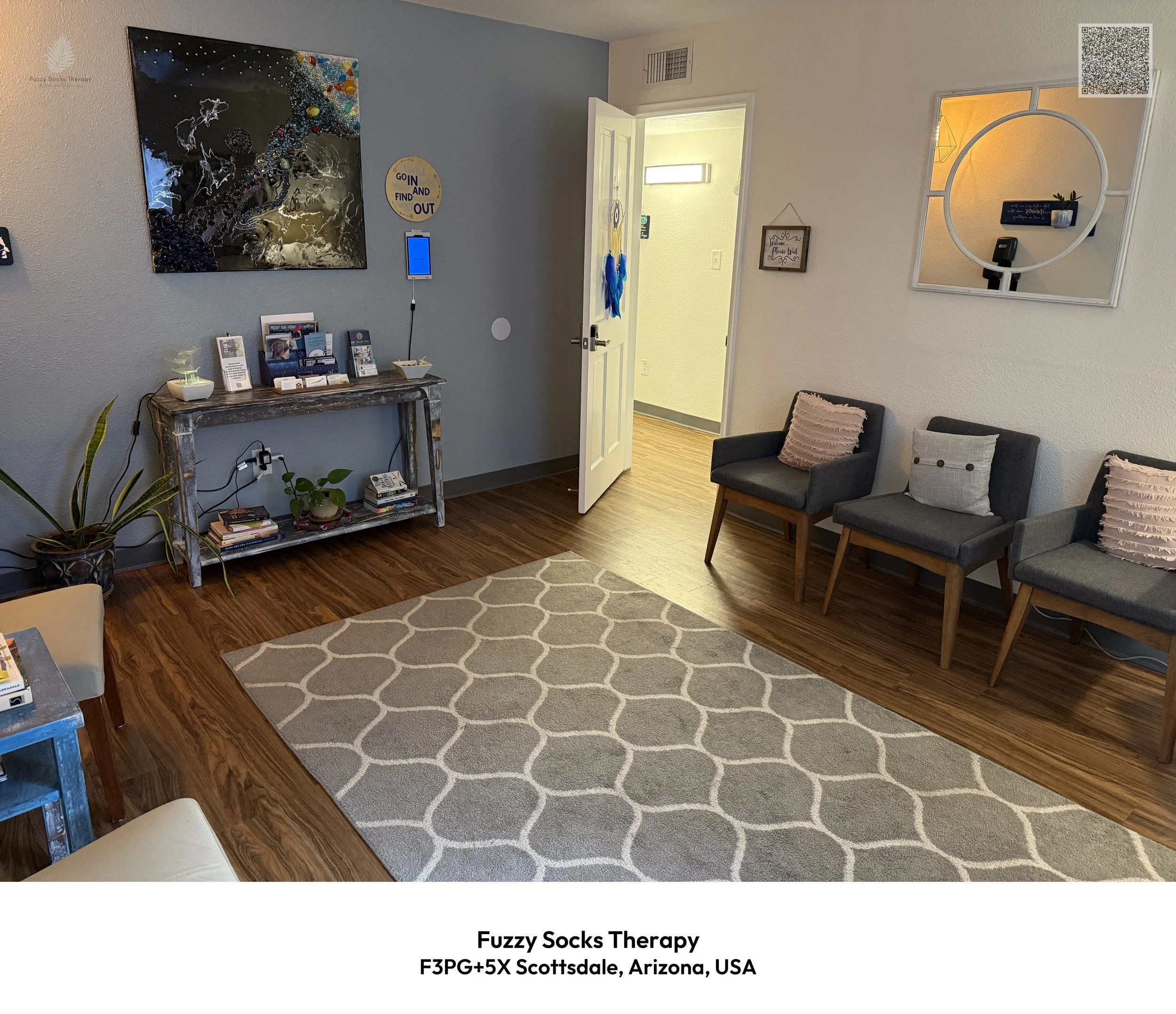
Open-location code (plus code): F3PG+5X Scottsdale, Arizona, USA
Map/listing URL: https://maps.app.goo.gl/cqhwvXU4UMg6QL1YA
Embed iframe:
The practice offers in-person therapy in Scottsdale along with online sessions for clients in Arizona, Colorado, and Florida.
Clients can explore services such as trauma therapy, EMDR therapy, Deep Brain Reorienting Therapy, neurodivergent therapy, child therapy, couples therapy, discernment counseling, and parenting intensives.
Fuzzy Socks Therapy is especially relevant for people navigating trauma, dysfunctional family dynamics, ADHD, autism, relationship conflict, and emotional overwhelm.
The website presents a direct, practical therapy style focused on real tools and meaningful change rather than vague advice.
Scottsdale clients looking for trauma-informed psychotherapy can find support that combines deeper healing work with concrete skill building.
The practice also offers help for adult children of dysfunctional families, couples on the brink, and neurodivergent kids, teens, and adults.
To get started, call (720) 378-8454 or visit https://www.fuzzysockstherapy.com/ to book a free consultation.
A public Google Maps listing is also available for Scottsdale location reference alongside the official website.
Popular Questions About Fuzzy Socks Therapy
What does Fuzzy Socks Therapy help with?
Fuzzy Socks Therapy helps with trauma, dysfunctional family patterns, neurodivergence, relationship conflict, emotional overwhelm, and related challenges for individuals, couples, and families.
Is Fuzzy Socks Therapy located in Scottsdale, AZ?
Yes. The official website lists the office at 3295 N. Drinkwater Blvd., Suite 10, Scottsdale, AZ 85251.
Does Fuzzy Socks Therapy offer in-person and online sessions?
Yes. The official site says the practice offers in-person therapy in Scottsdale and online therapy in Arizona, Colorado, and Florida.
What therapy approaches are listed on the website?
The website highlights EMDR therapy, Deep Brain Reorienting Therapy, discernment counseling, play therapy, Dialectical Behavior Therapy, Emotionally Focused Therapy, and practical trauma-informed skill building.
Who provides therapy at Fuzzy Socks Therapy?
The official website identifies the therapist as Lianna Purjes.
Does the practice offer couples counseling?
Yes. The website includes couples therapy, couples intensives, and discernment counseling for couples deciding whether to stay together or separate.
Does the practice work with children and adolescents?
Yes. The site says the practice offers child therapy and support for children, adolescents, and their families.
How can I contact Fuzzy Socks Therapy?
Phone: (720) 378-8454
Email: [email protected]
Website: https://www.fuzzysockstherapy.com/
Landmarks Near Scottsdale, AZ
Drinkwater Boulevard is the clearest local reference point for this office and helps nearby clients place the practice in Scottsdale. Visit https://www.fuzzysockstherapy.com/ for service details.
Old Town Scottsdale is a familiar city landmark and a practical reference for people searching for therapy near central Scottsdale. Call (720) 378-8454 to learn more.
Scottsdale Civic Center is another recognizable local landmark that helps define the surrounding area for nearby professional services. The official website has current contact details.
Scottsdale Stadium is a well-known destination in the city and a useful point of reference for local users. Fuzzy Socks Therapy offers both in-person and online sessions.
Indian School Road is a major corridor that helps many residents orient themselves in Scottsdale. More information is available at https://www.fuzzysockstherapy.com/.
Fashion Square and the surrounding central Scottsdale area are widely recognized by local residents and visitors alike. Reach out through the website to book a free consultation.
Downtown Scottsdale is a strong local search reference for people seeking counseling and psychotherapy services in the area. The practice serves Scottsdale in person and multiple states online.
Scottsdale Road is another major route that helps define the broader service area for clients traveling from nearby neighborhoods. The practice supports individuals, couples, and families.
The Scottsdale arts and civic district is a useful area reference for those familiar with the city center. Visit the site to review specialties and next steps.
Central Scottsdale commuter corridors make this practice relevant for nearby residents who want in-person therapy, while online sessions add flexibility for clients in Arizona, Colorado, and Florida.