The most generous couples I meet do not avoid saying no. They practice it. They treat no as a form of care, not a rejection. When partners can decline without shaming or stonewalling, desire becomes more honest, conflict cools faster, and everyday logistics lose their sting. The opposite is just as true. If no consistently lands like a slap, people either push harder or go underground. Either way, the relationship carries a quiet pressure that shows up in snappishness, distance, or late night scrolling in separate rooms.
I have watched couples rebuild trust by changing the way they use small words. Yes becomes a promise you mean. No becomes a way to stay real and still stay near. That work looks surprisingly concrete, and it does not require anyone to swallow needs or to perform constant empathy. It requires timing, tone, and a few reliable agreements that you both hold even when flooded.
What a boundary is, and what it is not
A boundary is a limit you set to protect your energy, your body, your time, or your values. In a relationship, boundaries communicate where influence ends and responsibility begins. Healthy boundaries make room for two full people to exist in one shared life. They do not control or punish. They do not remove the obligation to be kind.
There are two common misfires. The first confuses a boundary with a rule for someone else. If I say, You can never go out without texting me, I am dictating your behavior. That is control, not a boundary. A boundary sounds like, I feel anxious when I do not hear from you by evening. I will not wait up past 10 on weeknights. I will talk about plans the next day when I am rested. A boundary governs what I will do.
The second misfire treats boundaries as blunt shields. I said what I said shuts down connection. The point of a boundary is to create safety so connection can keep unfolding. If your no ends the dance, you will soon avoid each other to prevent the sting. If your no keeps a rhythm going, you will start bringing more requests to one another because you trust the process.
Why no feels risky in intimate relationships
Attachment tells the nervous system that this one person matters more than others. When they pull away, your stomach drops. When they look pleased, you exhale. In that context, no does not land as a syllable. It registers in physiology. People who grew up with unpredictable care often translate no as, You do not matter, or as the start of an argument that cannot be won. People who had to be the easy child often translate yes as the only secure option.
In trauma therapy we see this up close. A partner with a history of controlled environments or chaotic caregiving often goes red alert around limits. That is not manipulation, it is conditioning. The body learned to avoid conflict to stay safe. In EMDR therapy, when we target memories where needs were minimized or punished, people can loosen their grip on compliance. They gain microseconds of choice. That space is where a gentler no lives.
Neurodivergent partners, including those with ADHD or autism, often carry another complication. Many have spent decades masking, working hard to decode social cues, and pushing through sensory overwhelm. Direct language feels like relief. Indirect no feels like a trap. On the flip side, a blunt limit can register as criticism to a sensitive partner. Neither is wrong. The project is to shape a shared language where directness and care can coexist.
The anatomy of a connective no
Saying no without disconnection rests on a few pillars. First, you orient to the relationship, not only the issue. Tone and sequence do a lot of the work. If you lead with refusal, the other person braces. If you lead with recognition, they soften. Second, you offer an alternative path. Not now can morph into yes later, or yes in a different form. Third, you leave the door open for repair. If this boundary pinches, you promise to revisit it.
I teach couples to front load three elements when declining: signal care, state the limit plainly, and name what can happen instead. The words are short. The choice to use them is the skill.
Here is a quick gut check many couples tape to the fridge before they try a hard conversation.
- Check my body: Can I speak without contempt, eye rolling, or a raised voice? If not, pause. Name the stake: What am I protecting, time, energy, money, a value? Start with we: Remind us of the team before I draw the line. State one clear limit: Avoid a pile-on of old grievances. Offer a bridge: Suggest a concrete next step, time, or alternative.
Timing matters as much as language
A crisp no at the wrong moment inflames. A wobbly maybe in the right moment confuses. Couples who do this well pick windows when both nervous systems have a chance to cooperate. After food, not before. Seated, not standing in a doorway. Phones away. If the topic is loaded, ten to twenty minutes is usually the upper limit before your working memory starts to fray and you replay scripts rather than collaborate.
I often ask partners to create a micro-ritual for hard asks. It can be as simple as, Can we do a ten minute check-in about logistics at 7 after dinner? Or, I have a boundary I need to set about weekends. Is tomorrow morning ten good? The predictability lowers alarm and brings a little dignity to the moment.
A step-by-step format you can lean on
You do not need a script, but structure helps when your heart rate climbs. Use this framework as training wheels. With practice you will customize the phrasing to your voice.
- Warm the connection: I care about us, and I want to talk about how we handle Sundays. State the limit briefly: I am not available to host your family every weekend. Give a clear why: I need one weekend day free to recharge and prep for the week. Offer a workable alternative: I am open to hosting once a month and doing brunch out another time. Keep the field open: If this is hard to hear, I want to talk about it again on Thursday when we both have space.
The first and last lines do more than soothe. They remind both of you that the relationship is wider than the problem. You are promising process, not just a position. That promise is what keeps connection alive.
Finding language that sounds like you
Scripts only work if your mouth can say them without feeling fake. Swap in your idioms. A client of mine, a teacher with a dry sense of humor, tried to soften her limits with phrases that were not hers and kept tripping. We landed on direct, warm lines that matched her cadence. She now says, I love you, and no, not tonight, without a performative preface. Her partner hears the care in tone and trusts the steadiness of the boundary.

Some couples prefer sensory anchors over words. One autistic husband I worked with used a red bracelet during high sensory load evenings. It signaled, I am at capacity, please ask yes or no questions only. That small physical cue let his partner adjust without taking it personally. Neurodivergent therapy often adds these kinds of supports, both to reduce masking and to protect the bond when resources are thin.
Repair when a no lands badly
Even with clean language, limits sometimes sting. If your partner snaps, Fine, forget it, you might feel tempted to withdraw your boundary to restore peace. Do not. Fragile yes becomes a habit that breeds resentment. Instead, keep your footing and reach for repair. Try, I see that hurt. I still need the boundary. I want to hear what the no brings up for you. Are you up for that now, or later tonight?
If you were the one who hurled the sharp no, take responsibility without abandoning your limit. For example, I do want autonomy on spending. I can see I said that in a cutting way. My limit stands. Let me try again tomorrow morning, and I will bring numbers. Accountability rebuilds credibility. It also makes future nos easier to accept.
When histories make no complicated
Partners do not show up as blank slates. If one or both of you carries unresolved trauma, boundaries can light up old wiring. A simple decline to have sex can stir a flashback of being pressured as a teen. A financial limit can pull a memory of a parent who controlled every dollar. If either partner notices the past intruding on the present, it helps to name it plainly, not as a diagnosis but as a context. Something about this is touching old stuff for me. I am safe with you, and my body is tight right now. I still need the boundary, but I might be less graceful while this wave passes.
Trauma therapy gives people a map and tools for exactly this moment. EMDR therapy, in particular, can take the charge out of earlier experiences that glue themselves to current conflict. When past and present uncouple, partners stop overreacting to each other. The same words suddenly land. If you see patterns that do not shift with reasonable practice, loop in individual support along with couples therapy. Working both lanes often accelerates progress.
Boundaries in sex, money, and time
Not all nos carry the same weight. Saying no to a late night TV show is easy. Saying no to sex with a spouse who feels lonely is tender. In sex, the boundary is nonnegotiable. You cannot consent out of guilt https://cruzsvfb074.fotosdefrases.com/somatic-skills-in-trauma-therapy-befriending-the-body and expect intimacy to flourish. Still, you can wrap the no in contact. For example, I want to be close, and my body is a no for intercourse tonight. I can offer a bath and a back rub, or we can cuddle and talk for twenty minutes. Many couples find that explicit sexual menus reduce ambiguity and rejection bursts. The key is to make those alternatives real offers, not placations.
Money boundaries lean on data. If one partner says no to a purchase without showing the numbers, the refusal can feel arbitrary or power based. I ask couples to agree on a discretionary threshold. Purchases under that number do not require checking in. Purchases over it trigger a conversation within a day. Transparency protects both autonomy and the shared container.
Time boundaries look simple but often hide values conflicts. One person recharges with people, the other with quiet. A no to a social event can sound to the extroverted partner like a no to joy. Make the values visible. I want you to have a full, fun life. I also need a quiet day this weekend. I am a no for the party Saturday, and I will happily reserve Sunday for something you choose that we can do together. Values named out loud calm the zero sum feeling.
Digital life and micro boundaries
Phones confuse boundaries because they blend work, leisure, and friendship in a single object. Couples can spend years resentful over interruptions and slow responses without ever setting a joint policy. I ask for explicit agreements. During dinner, all devices face down in another room. If a work emergency breaks the rule, the person names it and cleans it up later with appreciation. Late night scrolling in bed often serves as noise to drown conflict or anxiety. If one partner wants closeness and the other wants a screen, a simple, predictable limit helps. For example, screens off by 10, and a twenty minute lights out cuddle before sleep on weekdays. No need to be purist. The point is consistency you can count on when you are tired.
Parenting, boundaries, and the family system
Children absorb the way you say no to each other. If they hear curt refusals or passive yes that morphs into resentment, they will mimic it with peers. If they hear boundaries spoken with warmth and clarity, they will adopt that pace. When a child has high needs or neurodivergence, couple boundaries can erode under the urgency of care. I see many pairs who never sit down without a request landing in their lap. They start to treat each other like co-workers on an endless shift.
Setting a brief daily protected window for the couple, even fifteen minutes, changes the family climate. The child learns that the grown-ups are a team, which is regulating. If a child is struggling with anxiety or behavior and it is consuming the household, child therapy can provide relief, and it often frees the couple to set more balanced boundaries without guilt. One parent may also need neurodivergent therapy guidance to understand differences in sensory thresholds or executive functioning that affect routines. The family wins when burdens and limits are right sized for the people who actually live there, not for an imagined ideal.
Culture, gender, and power
Saying no is not just a skills exercise. It sits inside layers of culture and power. In some families and communities, direct no to elders or to men carries social cost. In some workplaces, women who set limits are penalized, then come home depleted and risk penalty again if they insist on recharge time. Same sex couples face a different but real dynamic; the wider world may delegitimize the union, which can intensify the pressure to avoid internal dissent.
Name these forces out loud between you. Adjust agreements to reality. That might mean compensating inside the relationship for the places one partner must swallow limits outside. It might mean that the person with more structural power at work takes more load at home during intense seasons, or that the partner who faces more cultural pushback receives explicitly protected alone time without debate. Fair does not always mean equal. It means responsive to context.
Metrics that tell you it is working
Progress shows up in small, steady signals before it arrives as sweeping change. Watch for these shifts over four to eight weeks:
- Your nos get shorter and kinder. You do not overexplain. The partner on the receiving end recovers faster, minutes not hours. Fewer arguments rehash the same ground. You can name the pattern and pivot. Requests increase. People bring more of themselves when refusals are safe. Follow through improves. Yes means yes, and your calendar lines up with your words.
No single week proves a new pattern. Look across a month. If the average tone is calmer and the ruptures are less sticky, you are rewiring.
When to seek couples therapy, and what it does
If you keep setting thoughtful limits and the cycle still spins toward escalation or shutdown, bring in a third party. Couples therapy does not take sides. It maps the dance you both do and slows you down long enough to choose a different next step. A well trained therapist will also screen for safety. If there is coercion or violence, the conversation about boundaries changes shape entirely, and priority one becomes protection.
Many couples benefit from combining couples therapy with targeted individual work. EMDR therapy can reduce reactivity rooted in earlier experiences so the present partner is not carrying the weight of ghosts. If neurodivergence is part of your household, a therapist with neurodivergent therapy experience can translate communication styles and help you build sensory friendly routines that make boundaries easier to keep. The goal is not to normalize you into someone else’s template. It is to help you build a system that fits.
A few edge cases and what I recommend
Power plays disguised as boundaries. Sometimes a person claims a limit that consistently privileges their needs while sidelining the partner’s. For instance, I need spontaneity, so I cannot plan, which then leaves the other person holding all logistics. If a boundary makes the other partner chronically smaller, it is not a boundary. It is a preference masquerading as principle. Put it back in the pot and negotiate.
Chronic overcommitment. One partner says yes to friends or work, then attempts to make up for it by extracting from the relationship. The rule I invite here is pre-commitment conversation for anything that will cost joint resources. You can still say yes, but you both price the energy and time impact before you spend it.
Silent agreements. Many couples assume rules they never named. You should just know when to touch me, or You should just know we save before we spend. Bring these to the surface. If one partner wants a no around drop by visits from extended family, say it aloud. Silent rules create preventable hurt.
Practicing in the small, so the big goes better
Do not start with the sorest spot. Practice connective nos on the daily frictions that carry less weight. No to washing the car today. No to texting during a meeting. Yes later to a walk. Keep the steps simple. Over time, your nervous systems learn that a limit does not equal loss. When bigger topics arrive, you have muscle memory.
Couples who treat boundaries as an art form do not avoid pain. They move through it with less mess. They are allowed to be unalike and still be close. They show their kids and their friends that love is not a tangle of sacrifices but a living system that breathes in and out. A good no is part of that breath.
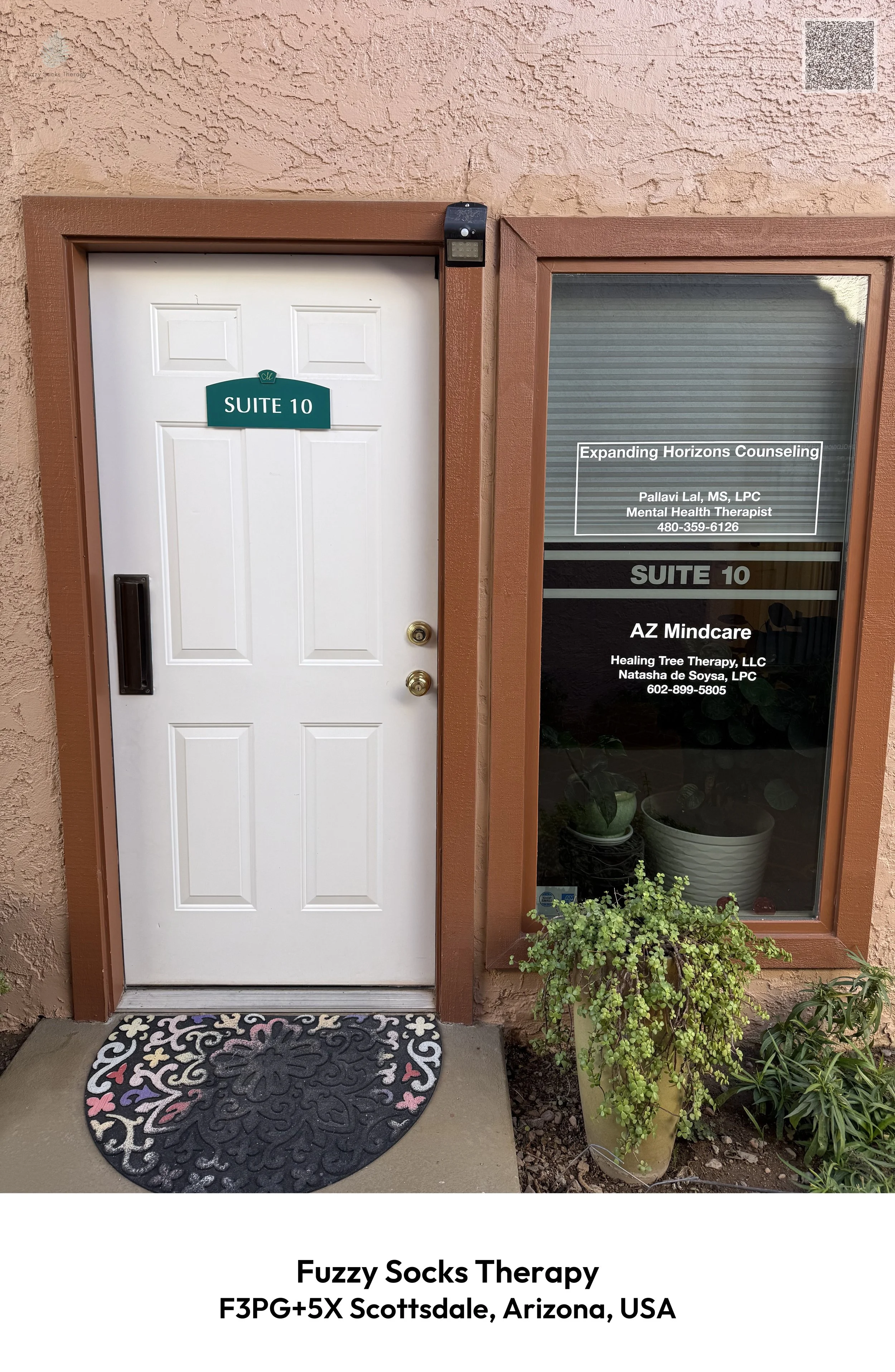
Address: 3295 N. Drinkwater Blvd., Suite 10, Scottsdale, AZ 85251
Phone: (720) 378-8454
Website: https://www.fuzzysockstherapy.com/
Email: [email protected]
Hours:
Monday: 9:00 AM - 5:00 PM
Tuesday: 9:00 AM - 5:00 PM
Wednesday: 9:00 AM - 5:00 PM
Thursday: 9:00 AM - 5:00 PM
Friday: 9:00 AM - 5:00 PM
Saturday: Closed
Sunday: Closed
Open-location code (plus code): F3PG+5X Scottsdale, Arizona, USA
Map/listing URL: https://maps.app.goo.gl/cqhwvXU4UMg6QL1YA
Embed iframe:
The practice offers in-person therapy in Scottsdale along with online sessions for clients in Arizona, Colorado, and Florida.
Clients can explore services such as trauma therapy, EMDR therapy, Deep Brain Reorienting Therapy, neurodivergent therapy, child therapy, couples therapy, discernment counseling, and parenting intensives.
Fuzzy Socks Therapy is especially relevant for people navigating trauma, dysfunctional family dynamics, ADHD, autism, relationship conflict, and emotional overwhelm.
The website presents a direct, practical therapy style focused on real tools and meaningful change rather than vague advice.
Scottsdale clients looking for trauma-informed psychotherapy can find support that combines deeper healing work with concrete skill building.
The practice also offers help for adult children of dysfunctional families, couples on the brink, and neurodivergent kids, teens, and adults.
To get started, call (720) 378-8454 or visit https://www.fuzzysockstherapy.com/ to book a free consultation.
A public Google Maps listing is also available for Scottsdale location reference alongside the official website.
Popular Questions About Fuzzy Socks Therapy
What does Fuzzy Socks Therapy help with?
Fuzzy Socks Therapy helps with trauma, dysfunctional family patterns, neurodivergence, relationship conflict, emotional overwhelm, and related challenges for individuals, couples, and families.
Is Fuzzy Socks Therapy located in Scottsdale, AZ?
Yes. The official website lists the office at 3295 N. Drinkwater Blvd., Suite 10, Scottsdale, AZ 85251.
Does Fuzzy Socks Therapy offer in-person and online sessions?
Yes. The official site says the practice offers in-person therapy in Scottsdale and online therapy in Arizona, Colorado, and Florida.
What therapy approaches are listed on the website?
The website highlights EMDR therapy, Deep Brain Reorienting Therapy, discernment counseling, play therapy, Dialectical Behavior Therapy, Emotionally Focused Therapy, and practical trauma-informed skill building.
Who provides therapy at Fuzzy Socks Therapy?
The official website identifies the therapist as Lianna Purjes.
Does the practice offer couples counseling?
Yes. The website includes couples therapy, couples intensives, and discernment counseling for couples deciding whether to stay together or separate.
Does the practice work with children and adolescents?
Yes. The site says the practice offers child therapy and support for children, adolescents, and their families.
How can I contact Fuzzy Socks Therapy?
Phone: (720) 378-8454
Email: [email protected]
Website: https://www.fuzzysockstherapy.com/
Landmarks Near Scottsdale, AZ
Drinkwater Boulevard is the clearest local reference point for this office and helps nearby clients place the practice in Scottsdale. Visit https://www.fuzzysockstherapy.com/ for service details.
Old Town Scottsdale is a familiar city landmark and a practical reference for people searching for therapy near central Scottsdale. Call (720) 378-8454 to learn more.
Scottsdale Civic Center is another recognizable local landmark that helps define the surrounding area for nearby professional services. The official website has current contact details.
Scottsdale Stadium is a well-known destination in the city and a useful point of reference for local users. Fuzzy Socks Therapy offers both in-person and online sessions.
Indian School Road is a major corridor that helps many residents orient themselves in Scottsdale. More information is available at https://www.fuzzysockstherapy.com/.
Fashion Square and the surrounding central Scottsdale area are widely recognized by local residents and visitors alike. Reach out through the website to book a free consultation.
Downtown Scottsdale is a strong local search reference for people seeking counseling and psychotherapy services in the area. The practice serves Scottsdale in person and multiple states online.
Scottsdale Road is another major route that helps define the broader service area for clients traveling from nearby neighborhoods. The practice supports individuals, couples, and families.
The Scottsdale arts and civic district is a useful area reference for those familiar with the city center. Visit the site to review specialties and next steps.
Central Scottsdale commuter corridors make this practice relevant for nearby residents who want in-person therapy, while online sessions add flexibility for clients in Arizona, Colorado, and Florida.