Masking often begins as a survival strategy. If you are autistic, ADHD, Tourette’s, dyslexic, or otherwise neurodivergent, you learn early what earns praise and what draws correction. You watch, memorize, and imitate. You rehearse facial expressions, strip the bounce out of your walk, suppress stimming, script small talk, schedule your day down to the last spoon of energy. People congratulate your “progress” while your jaw aches from clenching and your brain runs at redline. Over time, the performance blurs with identity. You can forget there was ever a different way to move through a room.
I have sat across from engineers who kept a spreadsheet of office banter to pass as “approachable.” Teachers who held in every urge to fidget until they drove home and cried in the driveway. Teens who studied TikTok trends to guess the right reaction to a friend’s story. Parents who tried to be the family’s calm center and then lost an entire Saturday to shutdown. None of them were weak. All of them were working twice as hard to meet rules they never wrote.
Unmasking is not a single reveal. It is a process of testing what you can set down, what you want to keep, and where you deserve accommodations or care. It happens slowly, in deliberate experiments, with attention to safety, relationships, and the nervous system. Neurodivergent therapy, grounded in affirmation rather than normalization, can turn that process from a risky leap to a guided path. When the work calls for it, trauma therapy and EMDR therapy can loosen knots that never belonged to you. Couples therapy and child therapy have a place at this table too, because masking rarely lives in just one person. It becomes a family habit and a relationship pattern, and it can change across generations.
What masking is, and what it costs
Masking is the set of strategies neurodivergent people use to fit neurotypical expectations. It includes social scripting, eye contact management, gesture matching, suppressing movement, forcing or flattening tone, hiding sensory needs, and overcompensating to avoid criticism. Many clients do not immediately recognize masking, because it feels like “being professional” or “acting mature.” The difference lies in cost. If the behavior leaves you depleted, detached from your body, or anxious before every interaction, it is probably masking.
The physiological bill comes due in predictable ways. I see persistent neck and jaw tension, gastrointestinal flare ups, migraines that land every Thursday after a week of meetings. There is often sleep fragmentation and a pattern of “crash weekends.” Emotionally, masking can create depersonalization, a vague sense that life is happening a few inches to the left. Socially, it produces brittle connections. People may like your glossy version but not know you well enough to help when you need it most.
The ethical trouble shows up in clinical rooms when well meaning providers focus on social skills training and miss the daily injury of self-erasure. Not all skills work is harmful. Learning how to navigate conflict or read a meeting room can be useful. It becomes a problem when the goal is to make you indistinguishable from someone you are not. Neurodivergent therapy starts from the opposite premise. You do not need to earn dignity through proximity to neurotypical norms. The work is to build a life that fits your brain and body, with support for the friction points of a world that was not designed for you.
A brief portrait: three clients, three paths
A software developer in her thirties came in with what she called “performance fatigue.” She was the reliable team member who always smoothed conflict. She rehearsed jokes before standups, kept her camera on even during sensory spikes, and never declined a meeting. We mapped her day and found she spent nearly four hours in shallow social performance scattered through the workday. She started by scripting fewer laughs in meetings and asking for agendas in advance. We framed it as an accommodation for focus, not a failing. Her manager agreed to pilot two meeting free afternoons. Within a month, she reported less end of day nausea and fewer Sunday scaries.
A high school senior, late diagnosed autistic and ADHD, had perfected the nod-and-smile. He wanted friends but was terrified of rejection if he dropped the mask. Our first unmasking experiments happened in low stakes spaces, a Dungeons and Dragons club that welcomed stimming, then a physics lab where he wore noise canceling headphones. He practiced saying, “I do better if I look away while I think.” He found one teacher who quietly rearranged seating for him. Grades stabilized. More importantly, he started to describe his own preferences without apology.
A couple in their forties came for conflict gridlock. One partner, ADHD and queer, had spent a decade masking domestic overwhelm while the other handled most logistics. Resentment had calcified. In couples therapy we rebalanced tasks with visual workflows and body doubling sessions. The masked partner admitted that the “I’ve got it” persona had been a safety hedge from a childhood where mistakes drew punishment. With this on the table, we shifted from criticism to co-design. The relationship softened as each person unmasked a little. They built in quiet stimming time after family events and wrote a short “no shame” repair script for when overwhelm took over.
Why unmasking feels risky
Unmasking can threaten three kinds of safety: physical, economic, and relational.
Physical safety is straightforward. Some people face stigmatization or harm when they disclose or present differently. Economic safety includes the risk of losing a job or being sidelined for promotions if you request accommodations or show visible difference. Relational safety is subtler. You worry that people liked the version of you they met, not the real one. There may be history here. Many adults in neurodivergent therapy describe early attempts to be themselves that were met with mockery, correction, or withdrawal.
A responsible therapy plan does not push clients to unmask into unsafe spaces. We start by surveying the terrain. Where are you fully safe, mostly safe, conditionally safe, or unsafe? We define experiments that match the zone. Fully safe spaces get the boldest trials. Conditionally safe spaces get incremental adjustments and a fallback plan. Unsafe spaces may call for strategic masking while you plan an exit or build protective measures.
Where trauma therapy and EMDR therapy fit
Masking is not always trauma, but trauma sticks to masking like burrs to wool. If you lived with chronic misattunement, bullying, coercive control, or medical trauma around diagnosis, your nervous system learned to self protect through appeasement or freeze. Trauma therapy acknowledges that pattern without shaming it. We work at the speed of trust. Somatic cues lead. I watch for breath holding, micro-shrugs, and the way your eyes move when you pick a story to tell. We widen your window of tolerance before we attempt any top down strategies.
EMDR therapy can be potent here, especially for “small t” events that piled up. We target snapshots. The classroom where you were forced to make eye contact until tears came. The office holiday party where a throwaway joke cut deep. The medical form that erased your identity with a single checkbox. When bilateral stimulation helps the nervous system reprocess those stuck images, clients often recover a sense of choice. They do not forget what happened. They discover that present cues are not identical to the past threat. That difference creates room for authentic behavior.
With EMDR therapy, I am careful to layer in resourcing specific to neurodivergence. Standard imagery might be too abstract. We build https://privatebin.net/?8588920282199ee9#E8wTNL7fCDdFsg1mFmbxJCX3KtyANU2Xg5aGvhdmwtTW sensory grounded anchors, like the weight of a favorite hoodie or the sound of a running box fan. We rehearse a mental “green room” with textures and colors that regulate you. I track for signs of dissociation, especially in clients who have spent years disconnecting from interoception.
The practical work of unmasking in therapy
Unmasking changes less through insight than through repeated, supported actions. Early sessions focus on mapping. We chart where masking happens, which elements cost the most energy, and which elements you want to keep as deliberate skills. Not all masking is a lie. Sometimes it is a courteous bridge, like holding back a monologue in a brief interaction. The litmus test is agency. If you can choose it, tweak it, and set it down without fallout, it is a tool. If it runs you, it is a mask.
I ask clients to log energy and overwhelm for one or two weeks in 15 to 30 minute blocks. A simple 0 to 5 rating works. We also track sensory inputs, social demands, and transitions. This becomes our baseline. We then test small shifts, such as replacing fluorescent desk lighting with lamp light, using fidgets during phone calls, braiding stims into daily routines, or setting firm boundaries around unscheduled time. We measure not just how you feel, but what the change costs. A tactic that helps your nervous system but triggers gossip or managerial scrutiny gets reframed as an accommodation request or deferred until we adjust the context.
Here is a short checklist I offer when someone is starting to unmask at work or school:
- Name two people who are safe allies and brief them on what you are trying. Choose one behavior to trial for one week in one setting, such as using headphones in open work time. Prepare neutral language for questions, like “I focus better with fewer inputs, this helps me do my best work.” Set a review date to evaluate energy, performance, and feedback. If the trial backfires, return to baseline and adjust the context rather than abandoning the goal.
Unmasking within relationships
Masking often becomes the script for marriage, co-parenting, and friendships. In couples therapy, I invite partners to inventory where each person feels pressure to perform. One might hide sensory overload during family gatherings, then snap at home. The other might mask solidity by overfunctioning, managing every detail to shore up a shaky system. Together we design micro-adjustments: shorter events, split social loads, designated decompression time, and shared language for signals.
The heart of this work is repair. Partners need a way to say, “I am nearing the edge,” without starting a fight. Short, specific phrases help. “I am at a 7 out of 10 on noise, can we step outside for three minutes?” “Words are not landing, can we switch to texting for logistics?” When the masked partner drops a facade, the other may feel a spike of uncertainty. This is normal. We name it, anchor in values, and keep moving. It helps to set metrics as a team, not just rely on vibes. Track weekly what went easier and what still burns energy. Adjust the family calendar, chore split, and bedtime routines with that data in hand.
For parents navigating their child’s masking at school or with extended family, child therapy can gently widen the space for authentic behavior. A play therapy room where stimming is welcome becomes a lab for self advocacy. We teach children simple self describing phrases, like “I jump when I am excited,” and coach adults to respond with curiosity instead of commands. For families, I suggest clear scripts with grandparents and teachers that focus on regulation rather than compliance. “We are helping Maya listen to her body and take breaks before she is overwhelmed. If you see her cover her ears, offer her headphones or a quiet corner. Please do not force eye contact, it makes it harder for her to process.”
Sensory ecosystems and the right tools
Therapy that treats masking as purely psychological misses the point. The body keeps the score in tactile, auditory, and visual bandwidth. Rebuilding your day often starts with a sensory and environment audit. We look at lighting, seating, soundscapes, and clothing. The right combination of earplugs and over ear headphones can cut noise by 20 to 30 decibels. A heavier chair or footrest can anchor restless legs. Swapping button downs for soft, tagless layers might free up just enough capacity to handle an afternoon meeting.
I encourage clients to set up “green zones” at home and work. A desk kit with fidgets, tinted glasses, and a small, predictable snack, like salted nuts or applesauce, turns a chaotic hour into a navigable one. In schools, a quiet hallway pass beats a token economy every time. Tech helps too, and not just the obvious apps. Many clients benefit from home automations that remove executive function bottlenecks. Lights that turn warm at 9 pm, a coffee maker that starts on a timer, or a door sensor that reminds you if the keys are still on the hook can shave off enough decision points to lower the day’s masking threshold.
Disclosure, boundaries, and the right amount of unmasking
Unmasking is not a moral duty to reveal every truth to everyone. Disclosure is a strategic choice, calibrated to context. Some clients prefer a functional disclosure: “I’m autistic, so I process best with clear agendas and minimal interruptions.” Others never name a diagnosis and instead request specific supports. Both are valid.
I teach a simple decision path. First, what problem are you trying to solve? Second, which information will move that outcome forward? Third, what are the risks if the information spreads? Fourth, do you have a documented accommodation or policy that supports your needs? Fifth, do you want me or another ally to co-sign the request? This keeps disclosure from turning into a confessional and frames it as part of competent self management.
When masking has kept you safe for good reasons
Some clients bristle at unmasking talk because their camouflage kept them alive. They navigated hostile schools or families by passing. They work in industries where deviation from script costs real money. Here we honor the mask. It was a brilliant adaptation to poor conditions. The question becomes, what do you want now, and where can you afford to loosen the grip?
We might plan a two track system. In hostile settings, you keep strategic masking while we build exits and buffers. Outside those settings, you practice fuller expression. Your nervous system learns that the mask is a jacket you can unzip, not skin you cannot shed.
Measuring progress without turning it into another performance
People who mask well often turn growth into a new performance metric and punish themselves for not hitting targets. We resist that. Progress can look like fewer shutdowns, shorter recovery times, less dread on Sunday nights, or one real laugh in a meeting. It can also show up in mundane acts. Tossing the scratchy shirt you always tolerated. Switching off camera when your brain is cooked and sending a clean follow up email afterward. Laughing at a stim that used to embarrass you. Each is data.
I ask for feedback from multiple angles. Your self report matters most. Where possible we also gather input from partners, teachers, or managers who understand what you are attempting and can name changes they see. We compare this to the initial energy logs. Sometimes numbers fool you. A client once reported “no progress” until we graphed her logs and saw she shaved 90 minutes of daily depletion by letting herself tap a foot and stop faking laughter. She had expected fireworks. What she got was viability. That is what a sustainable life feels like.
Common pitfalls, and how to navigate them
The two traps I see most often are overcorrection and isolation. Overcorrection sounds like, “I am done with all masking,” followed by an unfiltered week that ends in conflict or a crash. We avoid this by pacing and choosing contexts. You do not need to unmask equally with every person. Isolation shows up when clients withdraw to avoid the friction of mixed spaces. Solitude is essential, but isolation can shrink your world until only safe rooms remain. The goal is calibrated expansion, not a retreat or a charge.

Another pitfall is letting shame steer the wheel. Shame says you tricked people, or that your needs are too much. Therapy counters this with reality checks and compassion. You coped exactly as you had to. Unmasking is not an indictment of the past. It is a current choice to match your life to your nervous system.
The role of community
Even the best one to one therapy cannot replicate what happens when you meet other neurodivergent people living fully. Group spaces, whether in person meetups, moderated online communities, or interest clubs, give you mirrors that do not demand you change. You recognize your own patterns in others and borrow strategies they refined through years of trial. You also get to offer your hard won wisdom. That exchange builds dignity more reliably than any worksheet.
If joining a group feels risky, start with small, structured spaces. A weekly co-working hour with cameras optional. A local crafting circle where movement and silence are welcome. A special interest space where info-dumping is normal. Notice whether your body tightens or loosens after those hours. That will tell you more than any label.
When to consider higher levels of care
For some, masking erodes health to the point where outpatient therapy is not enough. If you cannot keep food down, are sleeping fewer than four hours most nights, or are experiencing frequent dissociation, step up the support. This could mean a short intensive outpatient program that integrates neurodivergent affirming approaches, a medical workup to rule out compounding conditions, or a coordinated care plan with psychiatry, occupational therapy, and your therapist. The goal is stabilization, not conformity.
What good neurodivergent therapy looks like from the inside
If you are interviewing therapists, ask how they think about masking and what they consider a successful outcome. You want answers that honor autonomy, emphasize co-design, and include environmental changes, not just cognitive reframes. Listen for comfort with stimming and silence. Notice whether they adapt the room setup for sensory needs without making it a big deal. In trauma therapy or EMDR therapy, ask how they modify protocols for alexithymia, interoception differences, or rapid cycling attention. In couples therapy, ask how they manage pacing and fairness when one partner processes slowly and the other speaks in bursts. In child therapy, watch whether the clinician follows the child’s lead and coaches adults as much as the kid.
A strong therapist will sometimes steer you away from an experiment that looks exciting but carries hidden risks. They will also celebrate wins that outsiders miss, like the phone call you did not make because you realized a text would preserve energy for bathing your child. Over time, you should feel less like a case and more like a co-researcher mapping your own life.
A practical starting plan you can try this month
If you want a place to begin, here is a simple, four week structure you can adapt.
Week one, tracking and resourcing. Log energy, note triggers, and add one bodily anchor, such as a weighted lap pad during emails or five minutes of rhythmic movement before meetings.
Week two, a single unmasking experiment in a safe setting. Tell one trusted person what you are trying. Choose a small behavior to let through, like allowing quiet vocal stims during solo tasks or wearing sunglasses in a bright store.
Week three, a communication upgrade. Draft two sentences for boundary setting, one for work and one for home. Practice them out loud. If you are in a partnership, schedule a 15 minute weekly check in to adjust plans based on energy reports, not just on the calendar.
Week four, reflection and decision. Review your logs. Keep what helped, drop what cost too much, and pick the next experiment based on evidence, not on aspiration.
Across these weeks, if old memories flare hot or dread spikes beyond what feels workable, consider adding trauma therapy or EMDR therapy to the plan. If your partner or family system is tightly intertwined with your masking, bring them into couples therapy or child therapy sessions so the context can shift with you.
Why this work changes more than one life
When one person in a system unmasks, rules change. Children watch a parent choose function over appearance. Partners learn to trust signals rather than guessing games. Friends start asking better questions. Workplaces, slowly, bend. The change is not overnight, and it is not total. It is often two steps forward, one step sideways, then a long plateau while your nervous system adjusts to new freedoms. That is still movement.
Unmasking is not about broadcasting your difference. It is about subtracting what hurts until your days fit your shape. That kind of empowerment looks ordinary from the outside. A quieter desk, a different jacket, a calendar with fewer back to back meetings, a home with two pairs of headphones by the door. Inside, though, you feel the click of alignment. You breathe without rehearsing. You laugh when you want to, not when a script says you should. You move your hands and no one flinches. You go to bed with just enough left to greet tomorrow. That, in my work, is the measure that matters.
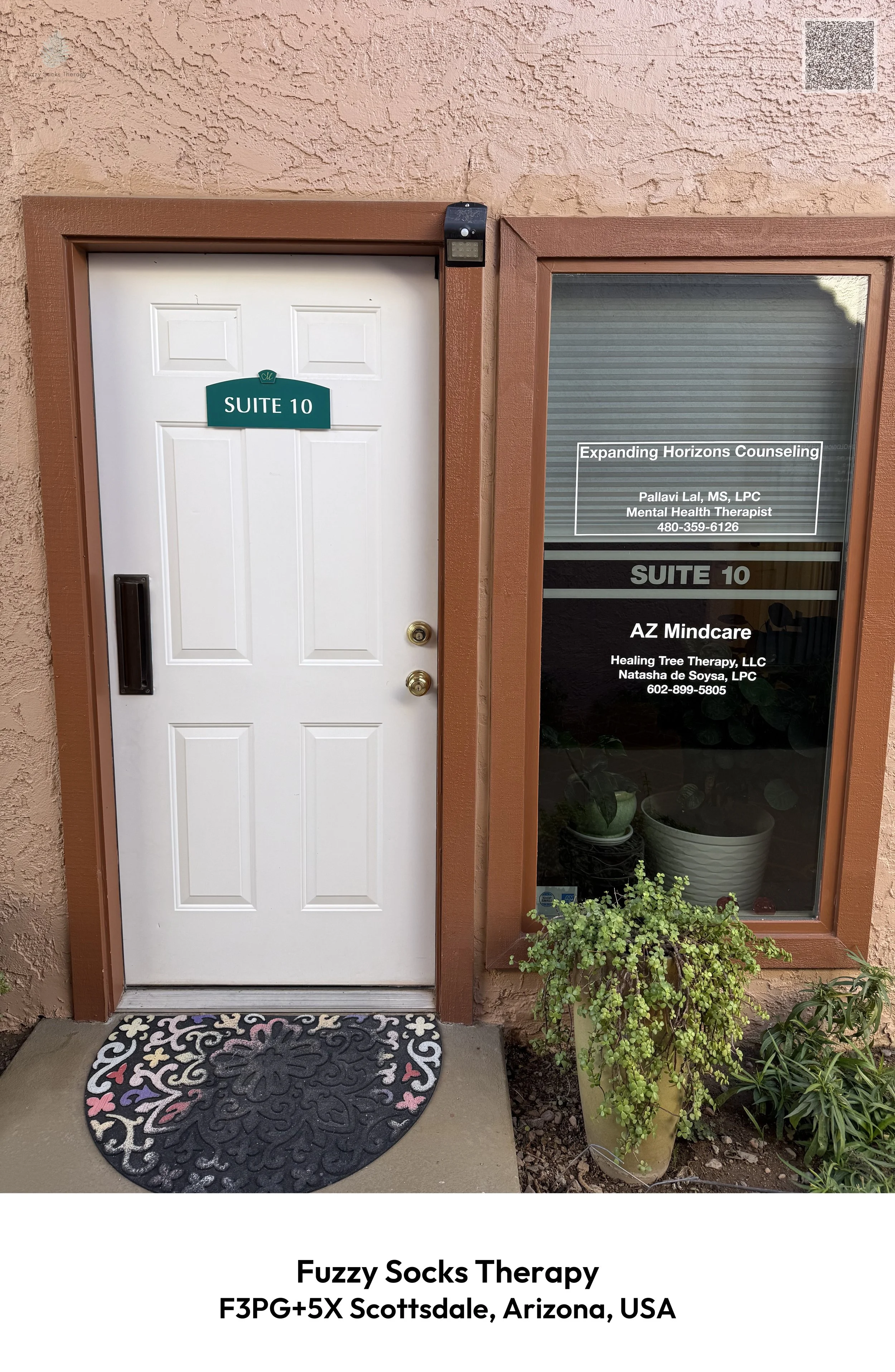
Address: 3295 N. Drinkwater Blvd., Suite 10, Scottsdale, AZ 85251
Phone: (720) 378-8454
Website: https://www.fuzzysockstherapy.com/
Email: [email protected]
Hours:
Monday: 9:00 AM - 5:00 PM
Tuesday: 9:00 AM - 5:00 PM
Wednesday: 9:00 AM - 5:00 PM
Thursday: 9:00 AM - 5:00 PM
Friday: 9:00 AM - 5:00 PM
Saturday: Closed
Sunday: Closed
Open-location code (plus code): F3PG+5X Scottsdale, Arizona, USA
Map/listing URL: https://maps.app.goo.gl/cqhwvXU4UMg6QL1YA
Embed iframe:
The practice offers in-person therapy in Scottsdale along with online sessions for clients in Arizona, Colorado, and Florida.
Clients can explore services such as trauma therapy, EMDR therapy, Deep Brain Reorienting Therapy, neurodivergent therapy, child therapy, couples therapy, discernment counseling, and parenting intensives.
Fuzzy Socks Therapy is especially relevant for people navigating trauma, dysfunctional family dynamics, ADHD, autism, relationship conflict, and emotional overwhelm.
The website presents a direct, practical therapy style focused on real tools and meaningful change rather than vague advice.
Scottsdale clients looking for trauma-informed psychotherapy can find support that combines deeper healing work with concrete skill building.
The practice also offers help for adult children of dysfunctional families, couples on the brink, and neurodivergent kids, teens, and adults.
To get started, call (720) 378-8454 or visit https://www.fuzzysockstherapy.com/ to book a free consultation.
A public Google Maps listing is also available for Scottsdale location reference alongside the official website.
Popular Questions About Fuzzy Socks Therapy
What does Fuzzy Socks Therapy help with?
Fuzzy Socks Therapy helps with trauma, dysfunctional family patterns, neurodivergence, relationship conflict, emotional overwhelm, and related challenges for individuals, couples, and families.
Is Fuzzy Socks Therapy located in Scottsdale, AZ?
Yes. The official website lists the office at 3295 N. Drinkwater Blvd., Suite 10, Scottsdale, AZ 85251.
Does Fuzzy Socks Therapy offer in-person and online sessions?
Yes. The official site says the practice offers in-person therapy in Scottsdale and online therapy in Arizona, Colorado, and Florida.
What therapy approaches are listed on the website?
The website highlights EMDR therapy, Deep Brain Reorienting Therapy, discernment counseling, play therapy, Dialectical Behavior Therapy, Emotionally Focused Therapy, and practical trauma-informed skill building.
Who provides therapy at Fuzzy Socks Therapy?
The official website identifies the therapist as Lianna Purjes.
Does the practice offer couples counseling?
Yes. The website includes couples therapy, couples intensives, and discernment counseling for couples deciding whether to stay together or separate.
Does the practice work with children and adolescents?
Yes. The site says the practice offers child therapy and support for children, adolescents, and their families.
How can I contact Fuzzy Socks Therapy?
Phone: (720) 378-8454
Email: [email protected]
Website: https://www.fuzzysockstherapy.com/
Landmarks Near Scottsdale, AZ
Drinkwater Boulevard is the clearest local reference point for this office and helps nearby clients place the practice in Scottsdale. Visit https://www.fuzzysockstherapy.com/ for service details.
Old Town Scottsdale is a familiar city landmark and a practical reference for people searching for therapy near central Scottsdale. Call (720) 378-8454 to learn more.
Scottsdale Civic Center is another recognizable local landmark that helps define the surrounding area for nearby professional services. The official website has current contact details.
Scottsdale Stadium is a well-known destination in the city and a useful point of reference for local users. Fuzzy Socks Therapy offers both in-person and online sessions.
Indian School Road is a major corridor that helps many residents orient themselves in Scottsdale. More information is available at https://www.fuzzysockstherapy.com/.
Fashion Square and the surrounding central Scottsdale area are widely recognized by local residents and visitors alike. Reach out through the website to book a free consultation.
Downtown Scottsdale is a strong local search reference for people seeking counseling and psychotherapy services in the area. The practice serves Scottsdale in person and multiple states online.
Scottsdale Road is another major route that helps define the broader service area for clients traveling from nearby neighborhoods. The practice supports individuals, couples, and families.
The Scottsdale arts and civic district is a useful area reference for those familiar with the city center. Visit the site to review specialties and next steps.
Central Scottsdale commuter corridors make this practice relevant for nearby residents who want in-person therapy, while online sessions add flexibility for clients in Arizona, Colorado, and Florida.